There are three kinds of manipulation in the Book of Mormon…
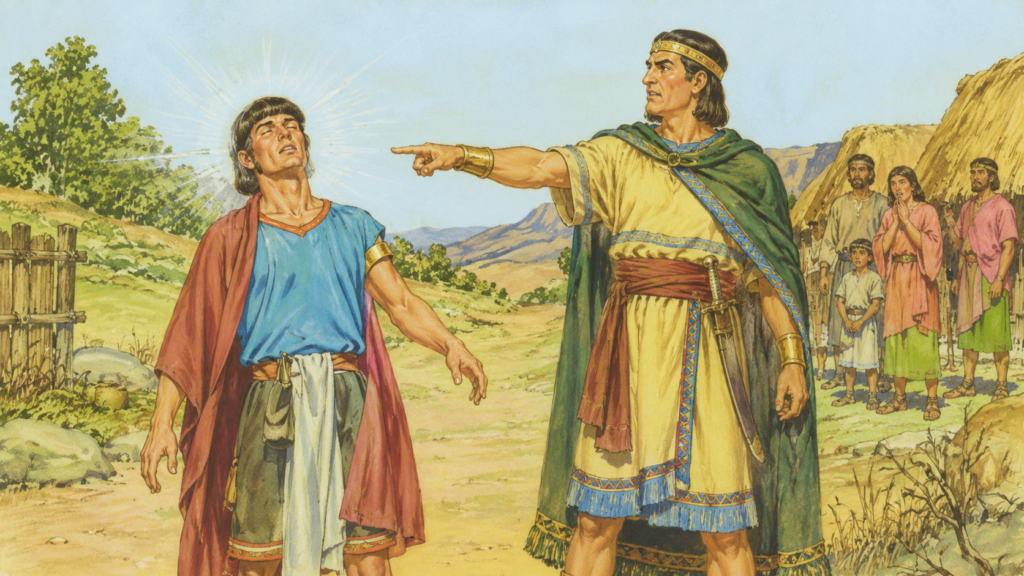
…well, in all the scriptures, really. But I think the story of Korihor in the 30th chapter of Alma has them all in one place.
Manipulation #1 I would call “Believe, or else.” The whole story of Korihor is essentially an argumentum ad baculum, or “appeal to the stick.” The idea is: believe, or else.
The story sets up a false alternative between “show me a sign” and “faith,” while ignoring the better option of objectivity.
If you are familiar with the story, my honest question for you is this: Can you make a moral case for Korihor being struck dumb?
Do you believe that silencing non-threatening speech is ever justifiable?
Manipulation #2 “Ye have had Signs enough.”
This is the idea that there is enough evidence for God, and if you don’t believe, then you are just being lazy or stubborn. Or worse, you are lying to yourself.
Christian apologist R.C. Sproul famously said:
“Everybody out there, despite their claims to the contrary, knows perfectly well that God exists.”
Romans 1:20 in the New Testament says essentially the same thing: there is enough evidence so that men are without excuse.
Or as Alma put it: “But, behold, I have all things as a ‘testimony that these things are true; and ye also have all things as a testimony unto you that they are true… Behold, I know that thou believest, but thou art possessed with a lying spirit.’”
But this is a direct contradiction to the idea of faith.
And, for Latter-day Saints, it’s a direct contradiction to the need for a spiritual witness through the Holy Ghost.
Manipulation #3: “If you don’t believe, it is because you are ‘resisting the spirit of the Lord.’”
Before we can rely on the Holy Ghost, we first have to determine that it is a valid form of gaining knowledge and not just an appeal to emotion.
As I said in my last post, Alma claimed that there is enough evidence for God. If you don’t believe, then you are just being lazy or you are lying to yourself. If that were true, then there would be no need for the Holy Ghost. Maybe Alma doesn’t have a testimony by the Holy Ghost?
A few chapters later, Alma makes a case that “if ye have faith ye hope for things which are not seen, which are true.”
”Which are true” is the sticky part.
How do you know what to put your hope in before you know that it’s true? This is putting the cart before the horse epistemologically.
It’s also not a testimony by the Holy Ghost.
Latter-day Saints use those ideas interchangeably when they are actually in direct contradiction.
They cant all be correct.
Which one is the wrong idea?
Leave a Reply